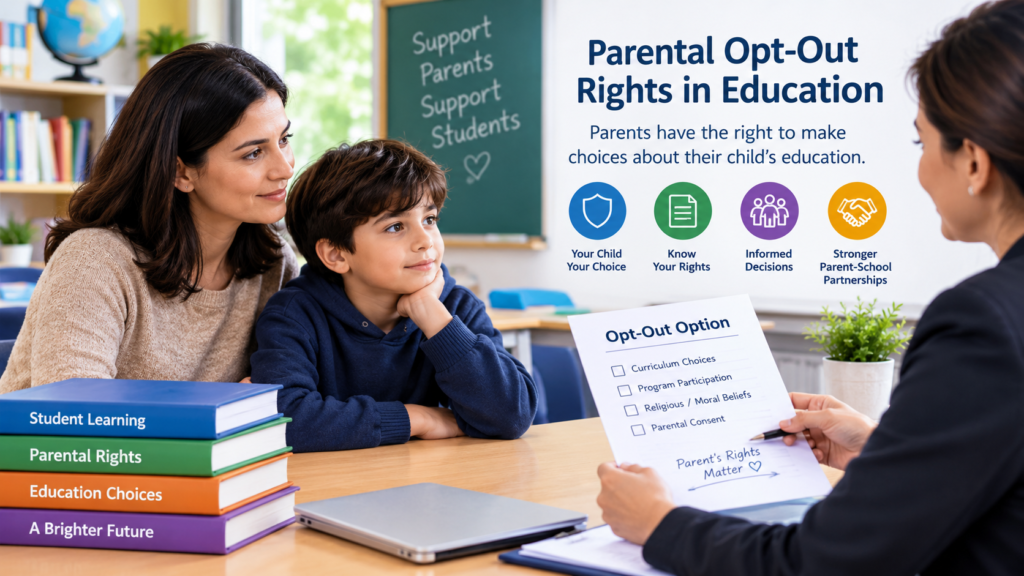
Understanding parental opt out rights in education. Sometimes kids skip lessons if parents disagree with what is being taught. This happens when family beliefs clash with classroom material. Not every parent wants their child exposed to certain subjects at school. A mom or dad might say no based on personal views. Learning about sex, religion, or politics can spark concern at home. The school then allows absences from those parts of class. It’s not always easy for teachers to balance group needs and private beliefs. Still, most schools accept these requests under set rules. What feels normal in one household may seem wrong in another. That gap leads some families to step back from specific topics. Decisions like this rest with carers, not officials. Lessons go on for others while one student steps aside. Respect for differences shapes how education works here.
A kid often remains at school even while doing something apart from the main lesson. Say they’re reading, finishing classwork, or just sitting quietly among books in the library corner. What lies behind allowing parents to say no to certain lessons isn’t about blocking knowledge it’s giving weight to family guidance. A child learns values first through home life, not hallways lined with whiteboards. That balance between classroom and household is why some schools let families speak up if something feels off. Small adjustments come from those conversations, nothing dramatic, just shifts made carefully. Even as lessons go on for most kids, classrooms hold steady with daily schedules. Because of this setup, learning stays on track even when families weigh different choices at home. While routines run normally, carers get space to decide what feels right for their situation.
The history behind parental opt out rights in education
Something shifted slowly, not overnight. Over time, people began questioning who really decides what kids learn. School rules once stood firm, leaving families on the sidelines. Control stayed with officials, while parents watched from a distance. Decisions came down from above, rarely shaped by home voices. The change crept in as trust in one-size-fits-all started fading. Slowly, more moms and dads came to feel they deserved greater say in choices shaping how their kids learn.
Talks around teaching grew louder; courts in various places slowly agreed – parents hold deep influence in guiding young lives. Key rulings across nations backed the notion: families can shape parts of child development, especially school paths. School power stayed intact, yet these moments made space – for parents, seen now as allies worth listening to. From those shifts, new rules emerged letting mothers and fathers opt out of specific classes, tasks, or questionnaires. Over time, people started calling these rules by another name – parental opt out rights in education. Schools kept sharing key lessons, yet families gained space to step back if something clashed too sharply with what they hold dear.
Why parental opt out rights in education are widely discussed today
These days more parents are talking about their right to skip certain school lessons. Because classrooms cover things like online risks emotional well-being how cultures differ and social issues. Schools didn’t always include such material in earlier times. Some learning experts say exposure to life-like situations prepares kids better. Through these discussions pupils may grow more aware of people around them. Home might be better for some subjects, one parent thinks, since personal values shape how ideas are shared. Social media stirs things up too.
What happens in class jumps onto screens fast – posts travel wide, videos circulate. A comment seen late at night sparks doubt by morning. Beliefs clash quietly in comment threads. Schools suddenly find themselves explaining choices made months ago. This can spark heated responses, then widen public talk on schooling. With politics involved, the spotlight grows on whether parents can withdraw their kids from certain lessons. Some see big roles for moms and dads in classrooms, while others draw tighter lines. All this pushes education into sharper view, often turning chats tense. Even when views clash, most still say working together – schools and homes – is what helps children do well.
Legal rules related to parental opt out rights in education
What parents can choose to skip in school depends on rules meant to weigh family wishes against what schools need to teach. It falls to schools to ensure each child gets an education that sets them up ahead. That includes key topics like reading, writing, math, and simple science. These basics open doors later on, helping kids grow and reach further. For this reason, families generally may not pull kids out of these main lessons. Yet rules in some areas let moms and dads ask for their kid to skip parts of class dealing with private subjects.
Such moments might mean talks in room settings questionnaires on inner thoughts or classes tied to community beliefs or heritage themes. In cases where guardians seek exclusion the institution commonly arranges a different task while those sessions run. Staff who lead classrooms along with office leaders generally aim for open exchanges with households so caregivers know what ideas come up across months of learning. A number of education centers mail notes handbooks or web-based messages detailing what gets taught. When parents feel uncertain on a topic, it gives them space to seek clarity. Because schools must follow rules, those rules also make room for family values to matter just as much.
Balancing education and parental opt out rights in education
What matters most about parents choosing out of certain school activities is how it can build trust between home and classroom. Open talks grow stronger when educators listen well and families feel heard. From one side comes lesson plans, years behind a desk, and methods shaped by study. From the other arrives knowing what makes a child laugh, struggle, or stay quiet. Balance shifts toward success once teaching meets insight. Students gain when those who know them meet those who guide them. When parents disagree with part of the curriculum, stepping back does not mean leaving everything behind. A mother or father might talk directly to teachers if something feels off about a topic. Instead of halting progress, another path opens for that student alone.
Lessons keep moving forward for others, undisturbed. Beliefs at home stay honored through quiet solutions. Still, schools carry the job of making sure key ideas are not missed later on. Knowing how things work – bodies, machines, communities – matters deeply for those growing up. What sticks may come from labs, books, real talk, or observation outside classrooms. What matters most often comes down to working together, even if it takes time. Schools teaming up with parents tend to get further when student progress sits at the center. When conversations stay open trust builds slowly yet steadily. Respect grows where listening happens without judgment. Choices around participation make space for different beliefs to coexist peacefully. Learning thrives best when everyone feels heard along the way.